BlackRock · Dave Batt
Life Moments by BlackRock was a multi-market digital campaign built around a suite of display assets tailored to different audiences, languages, and creative routes.
The ambition was to deliver highly localised messaging at scale, without losing the consistency expected of a global financial brand. From a design and production perspective, the project quickly became less about individual assets and more about building a system that could handle complexity efficiently.
Client
BlackRock
Deliverables
Campaign Guides
Production Masters
Design team
Alex Greaves
Bridge Fazio
Dave Batt
The Challenge
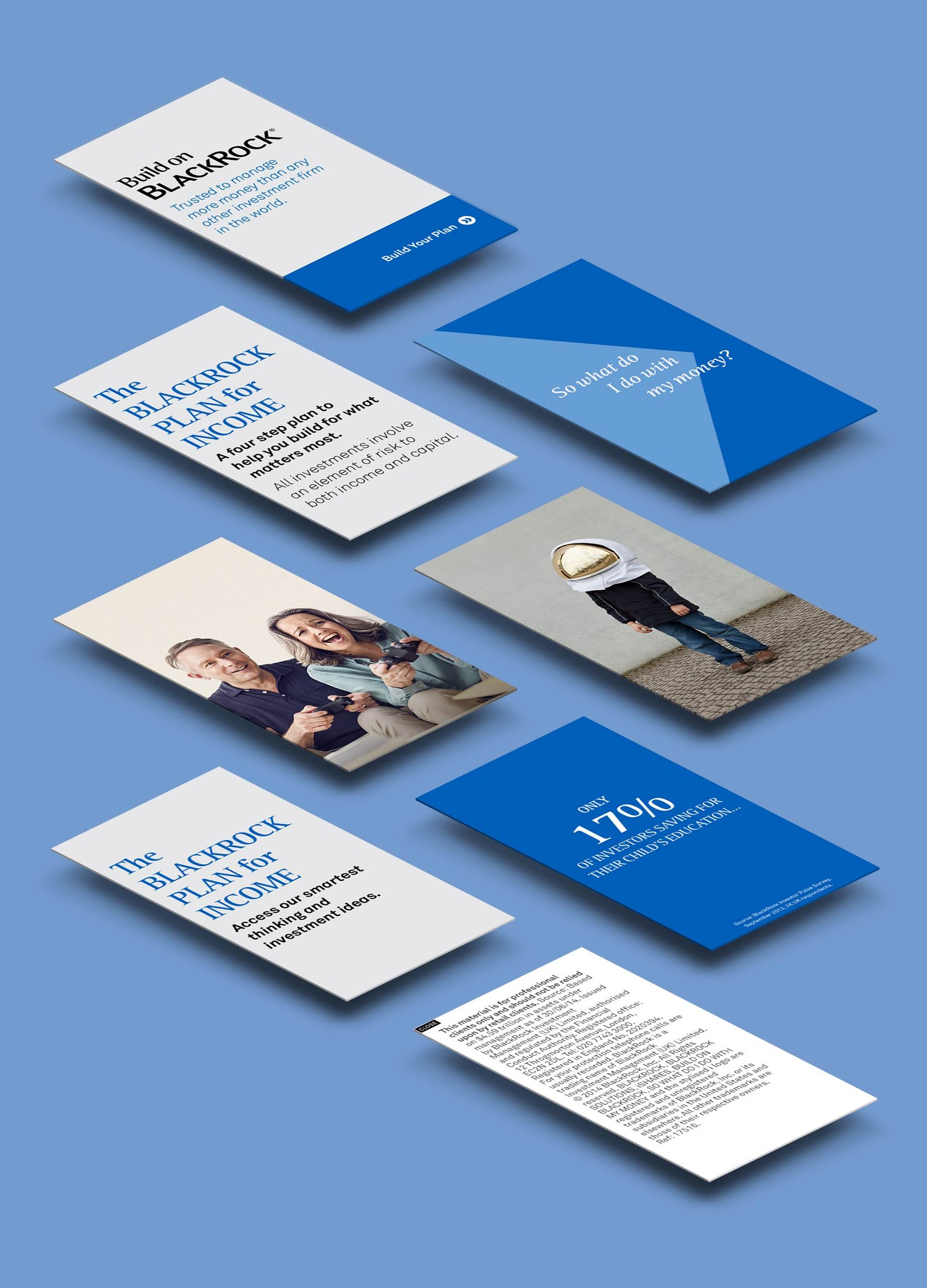
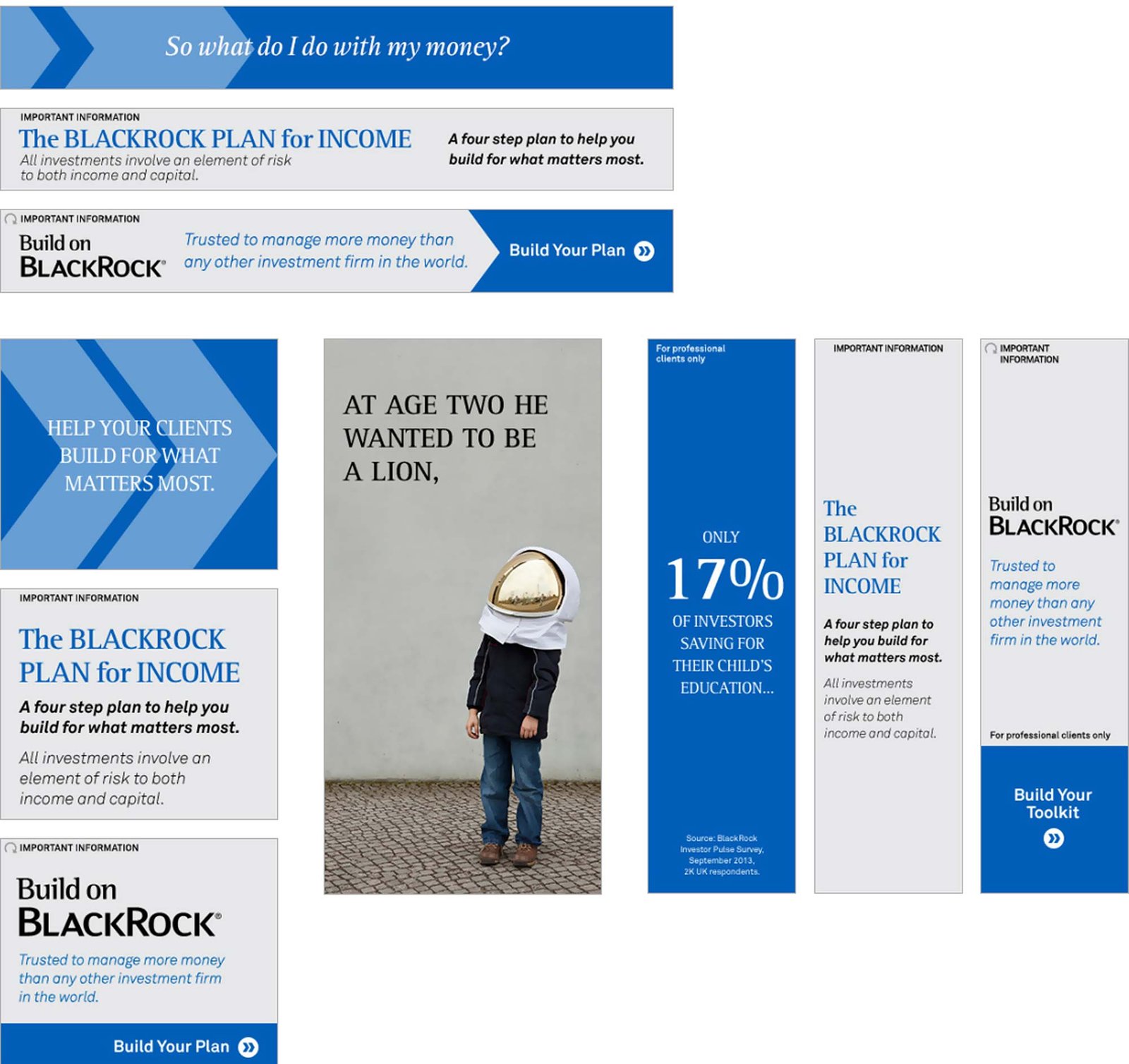
The campaign structure introduced a significant level of variation. Each display unit was made up of familiar components—imagery, messaging, calls-to-action, branding, and legal—but each of these shifted subtly depending on the audience or market.
Individually, these differences were manageable. Collectively, they created a system that was difficult to control.
With three languages, three audience groups, three creative routes and six formats, the campaign scaled to 162 storyboard variations. Managing this through traditional file setups would have meant maintaining a large volume of near-identical assets, where even minor amends could trigger hours of repetitive updates.
Compounding this was the nature of the creative itself. Many of the end frames were visually very similar, resulting in a high level of duplication across formats—inefficient to produce and risky to maintain.
My Role
I was brought in to bring structure to the system—reviewing the existing creative, identifying patterns, and defining a more scalable approach to production.
This wasn’t about redesigning the campaign, but about rethinking how it was built. The objective was to reduce duplication, improve consistency, and create a framework that the wider team could use with confidence as the campaign evolved.
Process
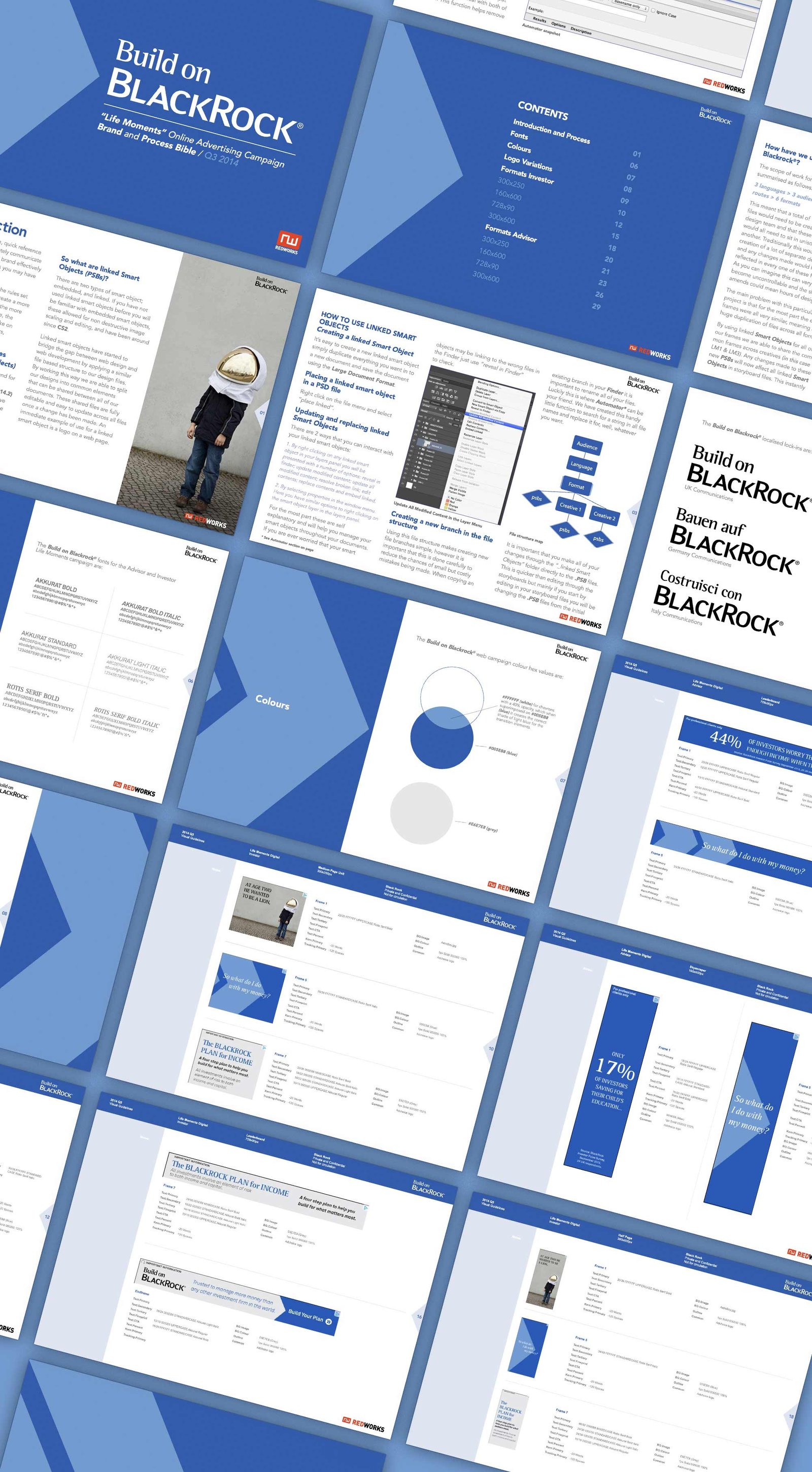
I began by auditing the existing assets, working back through previous iterations to understand how the campaign had been constructed. It was a process of deconstruction—breaking each unit down into its component parts and mapping where variations occurred.
What emerged was a clear pattern: while the content changed, the underlying structure did not.
From there, the focus shifted to systemisation. I defined a set of core components and established rules around how they should behave across formats and markets. The key was to allow for flexibility where it was needed, while introducing consistency where it wasn’t.
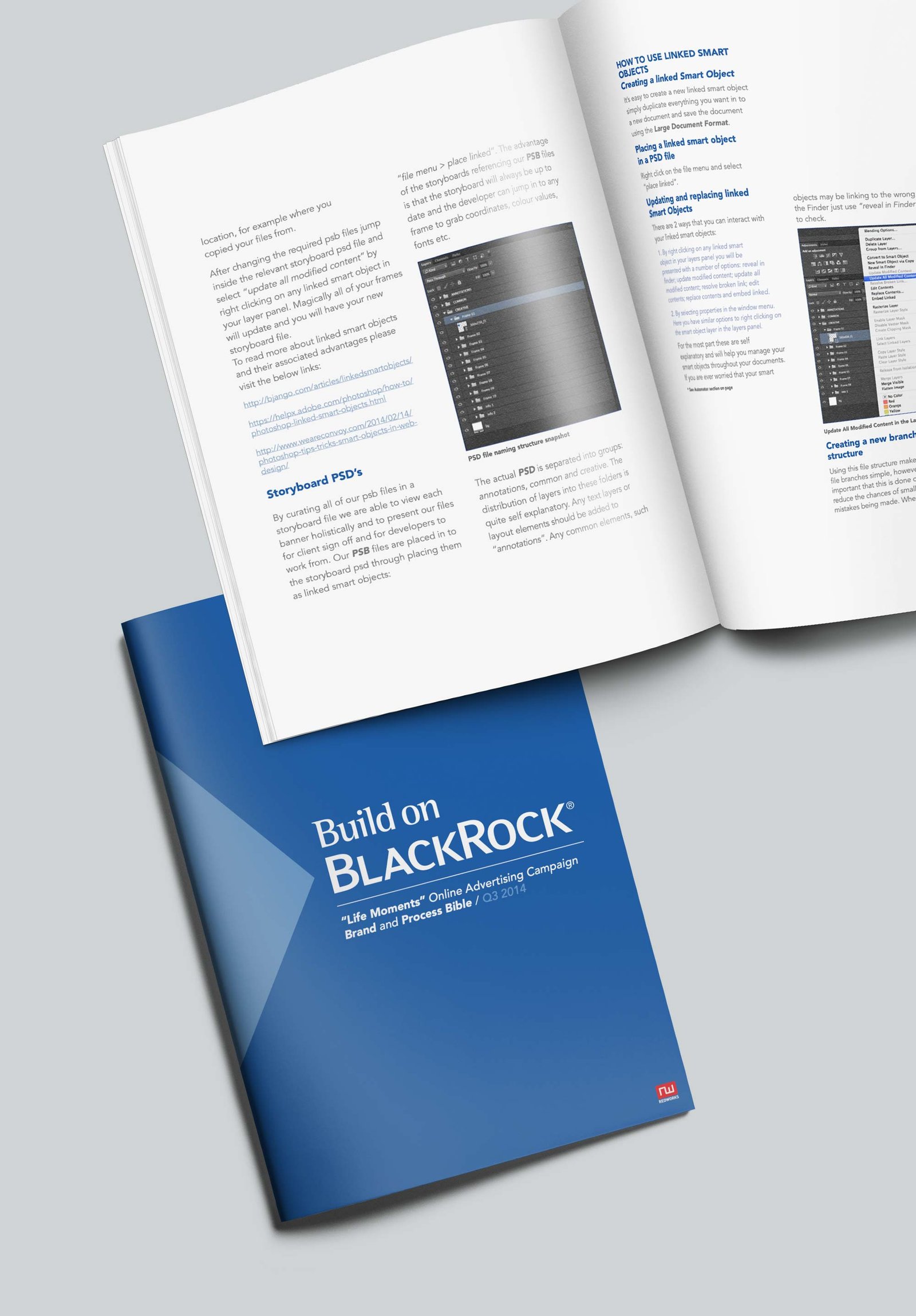
The biggest shift came through the introduction of a modular file structure using linked Smart Objects. Shared frames—particularly end frames—were built once and referenced across all storyboard files. This meant that a single update could cascade across every instance, removing the need for manual duplication.
The same approach was applied more broadly across the build, creating a setup that allowed designers to work both holistically at the campaign level and precisely at the individual frame level.
Results
The new approach significantly streamlined production. What had the potential to become an unwieldy and time-intensive process became far more controlled and efficient.
Updates that would previously have required multiple file edits could now be handled centrally. Consistency across all variations improved, while the overall workload was reduced.
More importantly, the project established a scalable framework for future iterations—turning a complex localisation challenge into a repeatable, manageable system aligned with the pace and demands of agency delivery.